Iona Beach and the long jetty
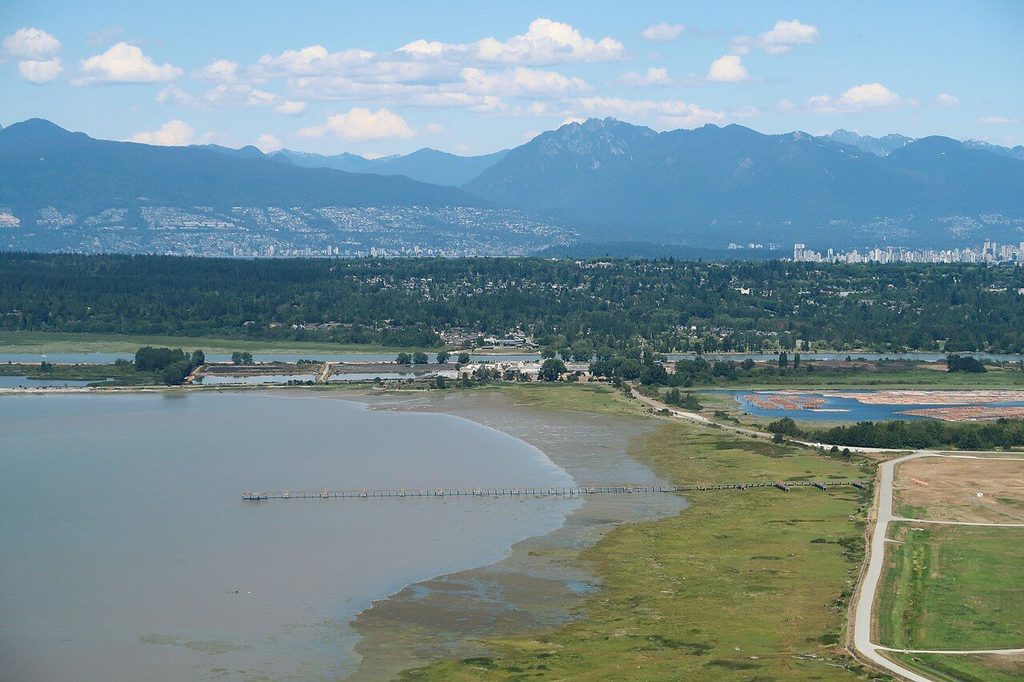
A sandy spit north of the airport, a straight walk kilometres out into the Strait of Georgia, and jets climbing low overhead: Iona is wide, windy and unusual. More in River and dykes
From the Canada Line Long walk or cycle from TempletonGetting there Drive or cycle via Sea IslandBring Wind layer, water, binoculars, sun protection
Local note. There is no shade or shelter on the jetty and the wind is often strong. Carry water and a warm layer, and turn back early if the weather changes.
Iona Beach Regional Park sits on Iona Island, a low strip of land joined to Sea Island just north of Vancouver International Airport. It is not a postcard beach. It is flat, windswept, crossed by a long jetty, and right beside a wastewater treatment plant. Yet it has a strange, open beauty: sand and driftwood, marsh grass, wide views across the strait, and airliners climbing out low over your head. Many locals rate it as one of the more memorable walks in the region.
Where it is and what it feels like
The park lies at the mouth of the Fraser River's north arm, on Musqueam traditional territory. The Musqueam village and reserve lands lie just across the north arm, and the whole of this shoreline has been part of their fishing and travel routes for thousands of years.
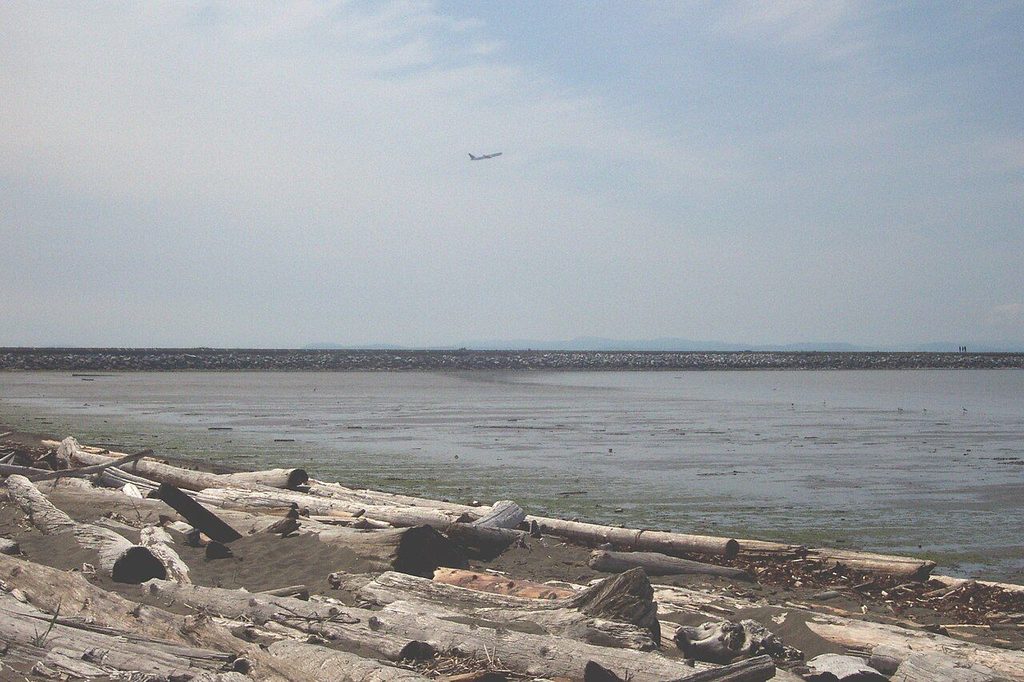
Arriving, you pass the treatment plant and park by a sandy beach strewn with logs. Ahead, the jetty runs straight out into the strait. Behind you are the North Shore mountains and, on a clear day, the towers of downtown Vancouver. To the south, the airport's runways sit just across the water.
The beach itself is a mix of fine sand, gravel and heaps of driftwood washed down the Fraser and piled up by winter storms. Visitors often build lean-tos and shelters from the logs, and on warm days people settle into them out of the wind. At low tide the water pulls back a long way, leaving shallow pools and wet sand that birds work for food. At high tide the strait comes right up to the logs, which cuts off a long walk along the shore; the jetty stays dry.
The jetty walk
The main attraction is the south jetty, a raised path that runs about four kilometres out into the Strait of Georgia. The jetty carries a pipe that takes treated water out to sea, and the path runs along the top of it. The walk out and back is around eight kilometres, flat the whole way, with water on both sides.
A few things to know before you set off:
- There is no shade, no shelter and no water on the jetty. Bring what you need.
- The wind can be strong, and it is usually stronger at the far end.
- Cyclists use the path too. Keep to one side.
- You can turn around at any point. Even a short walk gives you the sense of being out on the water.
At the far end you are surrounded by the strait, with Vancouver Island's hills on the horizon on a clear day. Seals sometimes haul out on the rocks below the jetty, and seabirds work the water on both sides.
Also worth a look: Garry Point and the West Dyke
Planes overhead
Iona's position next to the airport is part of its draw. Depending on the wind direction and the runway in use, planes take off or land close by, and some pass low over the beach. Aircraft spotters come here with long lenses, and families come just to watch the big jets. The noise comes and goes; it is loud for a moment, then quiet again.
If you are interested in the airport and how to get in and out of it by train, see a layover on the Canada Line.
Birds and the ponds
Iona is well known among birders. The marsh, the beach and the settling ponds near the treatment plant attract shorebirds, ducks, gulls and birds of prey, and unusual species turn up during migration. Spring and autumn are the busiest seasons, but winter brings ducks and raptors too.
Bring binoculars and walk slowly along the edges of the marsh. Stay on marked paths, and respect any signs around the ponds, since access rules can change. The same estuary continues south along Richmond's west shore, and the West Dyke Trail offers similar birding from the other end.
By car or bike from Sea Island
Iona Beach is easiest to reach by car or bike. From the airport road network on Sea Island, follow the signs north toward the park; the route crosses farmland and industrial land before reaching the beach. Parking is free in the lot at the time of writing.
There is no direct bus. The nearest Canada Line station is Templeton, and from there it is a long walk or a moderate bike ride, mostly on roads with traffic. If you are cycling, a quieter route uses the dyke paths where they connect.
The park has washrooms near the parking area, though some may close outside summer. There are picnic tables and space to sit on the logs.
Sunsets, birds and winter raptors
- Summer: the warmest and calmest, with long evenings. Sunsets over the strait are excellent.
- Spring and autumn: the best for birds, with fewer people.
- Winter: raw, grey and windy, but quiet, and often good for raptors.
The jetty is exposed, and the walk back can be much harder than the walk out if the wind is in your face. Leave enough daylight to return.
Weekday mornings are the quietest time at Iona. Sunny weekend afternoons bring more people, but the jetty is long enough that it rarely feels crowded once you are out past the first kilometre. Sunset is popular in summer; if you stay for it, note that the walk back along the jetty in fading light takes the better part of an hour.
Respecting the place
Iona is part of a regional park system and part of a working landscape at the same time. The treatment plant, the airport and the river traffic all share this corner with the birds and the walkers. Pack out what you bring, keep dogs under control where signs say so, and leave the driftwood structures for the next visitors to enjoy.