The Richmond Olympic Oval
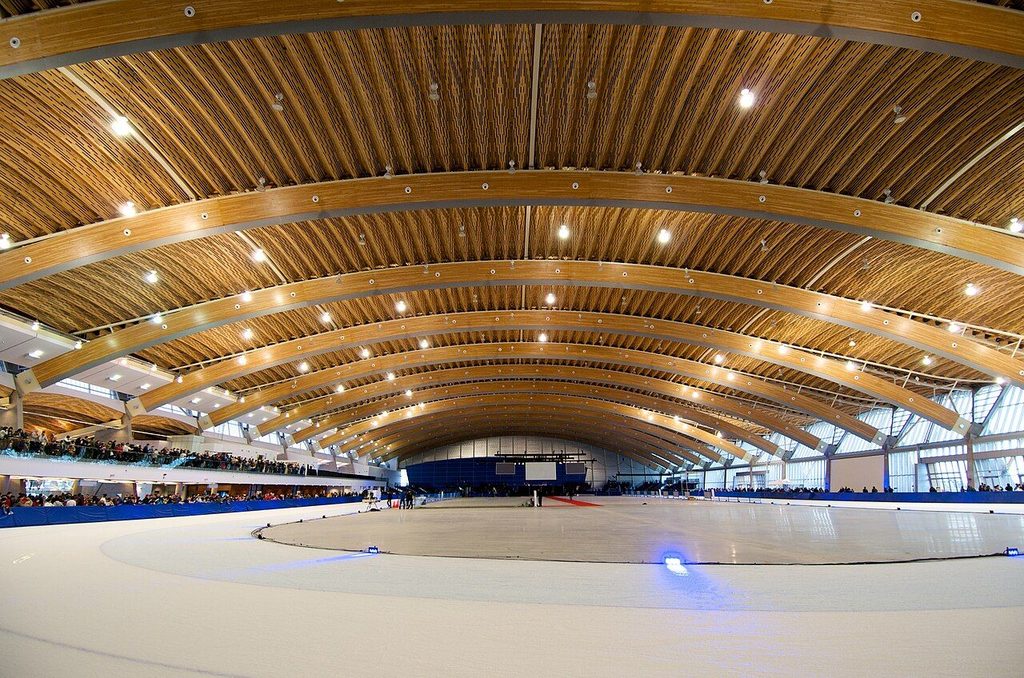
Built for speed skating at the 2010 Winter Games, the Oval is now a busy community sports centre with a striking wooden roof beside the Fraser's Middle Arm.
From the Canada Line About ten minutes on footGetting there Canada Line to Lansdowne, then walkBring Comfortable shoes, sports gear if playing
Local note. The riverside path outside is great for walking or cycling. Floatplanes land on the Middle Arm, so keep an eye on the water as well as the sky.
On the north edge of Richmond's city centre, where the Middle Arm of the Fraser River runs between Lulu Island and the airport, a long, low building with a curving roof sits beside the water. This is the Richmond Olympic Oval. It was built to host long-track speed skating at the 2010 Winter Olympics in Vancouver, and since then it has become one of the busiest community sports centres in the region.
Built for the 2010 Games
The Oval opened in 2008, ahead of the Games, and hosted the long-track speed skating events in February 2010. During those two weeks it held a 400-metre ice oval, seating for thousands of spectators, and some of the fastest skating in Olympic history.
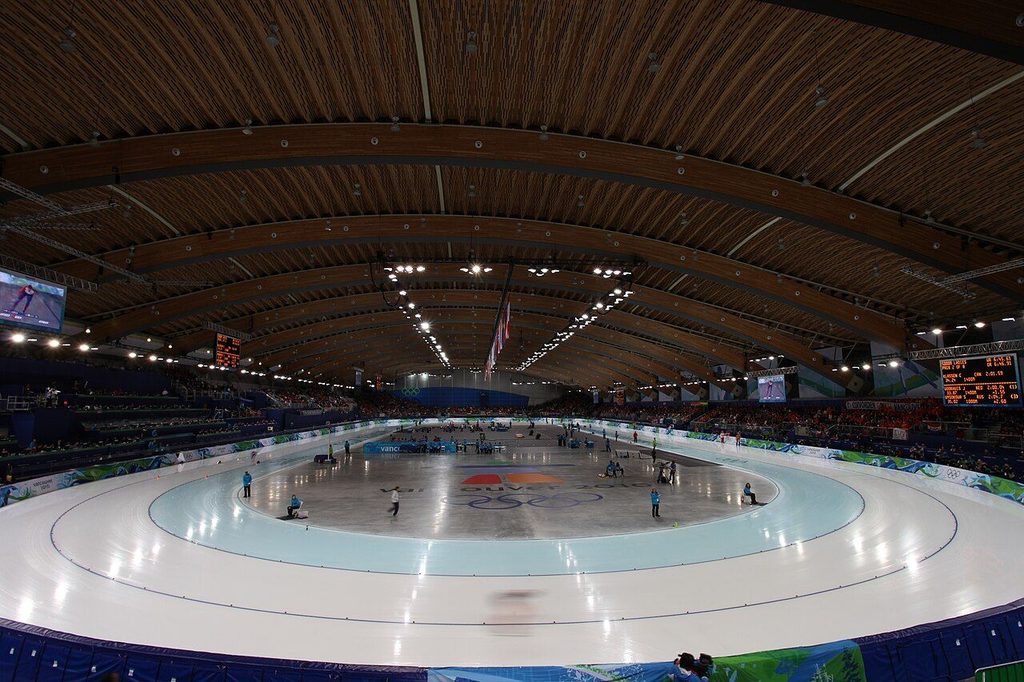
The building was designed from the start to be converted after the Games. Once the Olympics ended, the speed-skating track was removed and the space was rebuilt for a range of sports. That planning was a key part of the project, and the Oval is often cited as an example of an Olympic venue that kept its usefulness after the Games.
The wood roof
The most striking part of the Oval is its roof. Long arches of wood and steel span the full width of the hall, and between them sit panels made from small pieces of wood arranged in a rippling pattern. Much of that wood came from British Columbia pine forests killed by the mountain pine beetle, a way of putting damaged timber to good use.
Standing under the roof, you get a sense of its scale. The hall is huge and open, without columns, and the warm colour of the wood softens what would otherwise be a vast industrial space. Light enters through glass along the sides, and the roof's curves echo the flow of the river outside.
The building's design has won attention from architects and engineers, and it is a good example of large-scale wood construction, something British Columbia has become known for.
Outside, the roof is just as distinctive. Its long, gently curving profile is meant to suggest the movement of water and the flight of a heron, and from the riverside path it reads as a single smooth shape against the sky. Walk around the building to see it from different angles; the north side, facing the river, shows the curve best.
The site also had a practical side. Rainwater from the large roof is collected and reused, and the building was planned with energy efficiency in mind, ideas that were still fairly new for a venue of this size when it was built.
What is inside today
Today the Oval is a community sport and fitness centre. Depending on the season and the schedule, the building holds:
- Ice rinks for hockey and skating.
- Courts for basketball, volleyball and badminton.
- A running track and a large fitness area.
- Space for high-performance athletes and training programmes.
Also worth a look: A layover on the Canada Line
Visitors can buy day passes for drop-in activities.
Even if you are not here to play, the lobby gives you a feel for the building, and you can ask at the front desk whether a look into the main hall is possible without booking an activity. Weekday mornings tend to be quieter than evenings and weekends, when local leagues and classes fill the courts and rinks.
The Oval also houses a museum about the Olympic Games and sport, with interactive exhibits where you can test yourself in simulated sports, along with displays of Olympic history. It is a good stop for families and for anyone with an interest in the Games.
The riverfront outside
Outside, the Oval sits beside the Middle Arm of the Fraser River. A wide path runs along the dyke, with open lawns, public art and views across the water to Sea Island and the airport.
From the riverfront you can watch:
- Floatplanes taking off and landing on the Middle Arm.
- Larger jets on approach to the airport.
- Rowers and paddlers on the river.
- Herons and other birds along the shore.
The path is part of a longer network of dyke trails around Richmond. Cyclists can follow it west and south toward the West Dyke Trail and Steveston on a mostly flat route.
The land beside the Middle Arm is part of the Musqueam people's traditional territory. Their main village lies just across the north arm, and the river has been a travel and fishing route for them for thousands of years.
Ten minutes from Lansdowne
The Oval is close to the Canada Line. From Lansdowne station, walk north along the streets toward the river; it takes about ten minutes. From the airport, ride the Canada Line south toward Richmond, changing trains at Bridgeport if needed.
If you have a short layover, the Oval and the riverfront path make one of the easiest Richmond outings. See a layover on the Canada Line for timing tips.
There is parking at the building, but the train is simpler for most visitors.
Combining your visit
The Oval is in Richmond's city centre, close to many places to eat. After a walk or a workout, head toward No. 3 Road for dim sum, noodles or a food court; see eating your way down No. 3 Road.
You can also walk the riverfront path at sunset, when the light reflects on the water and the planes' lights come on over the airport. In summer, the night markets near Bridgeport are a short ride away.
The Oval is not a monument frozen in 2010. It is a busy, everyday building, full of people playing, training and exercising. That is perhaps the best legacy an Olympic venue can have.