The International Buddhist Temple
Golden roofs, carved stone lions and a quiet garden on a busy Richmond road: how to visit one of the largest Chinese Buddhist temples in North America.
From the Canada Line About half an hour by busGetting there Bus from Richmond-Brighouse stationBring Modest clothing, socks, a quiet voice
Local note. Dress modestly, keep your voice low, and follow posted signs about photography inside the halls. Remove your hat indoors and never climb on statues.
On a stretch of Steveston Highway in east Richmond, surrounded by farm fields and low houses, a complex of golden-roofed halls rises behind a white stone wall. This is the International Buddhist Temple, also known as Kuan Yin Temple, one of the largest and most elaborate Chinese Buddhist temples in North America. It is an active place of worship that also welcomes visitors, and it offers a calm, beautiful contrast to the rest of the city.
A palace in a farm field
The temple was built in the 1980s in the style of a Chinese imperial palace. Its curved roofs, red columns, painted beams and carved balustrades follow traditional forms, and many materials and decorations were made by craftspeople in China. The result feels both grand and carefully detailed.
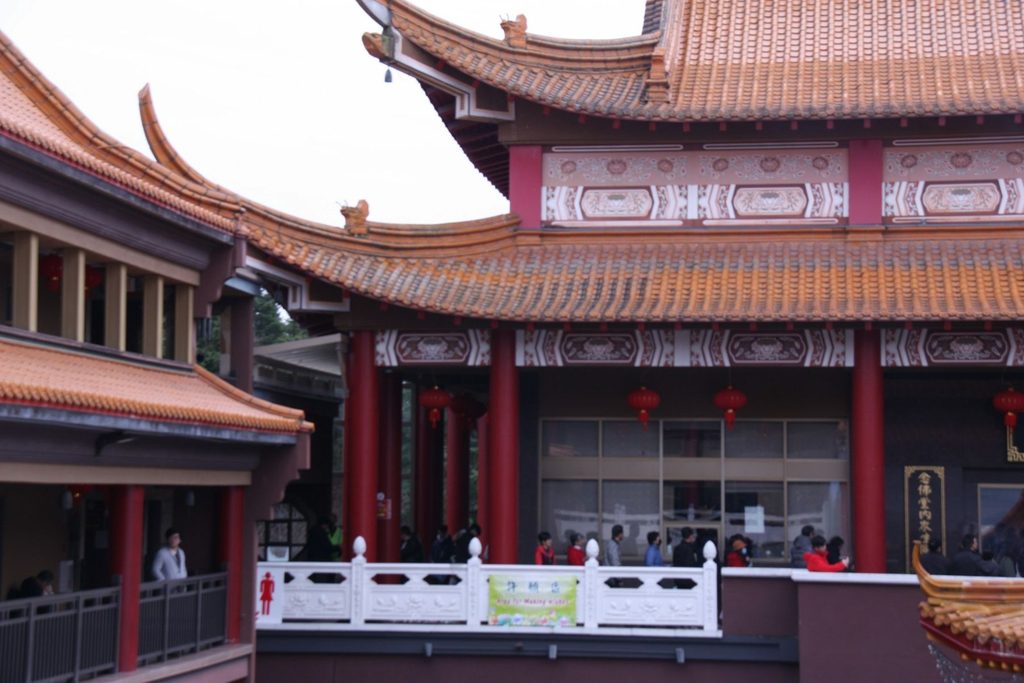
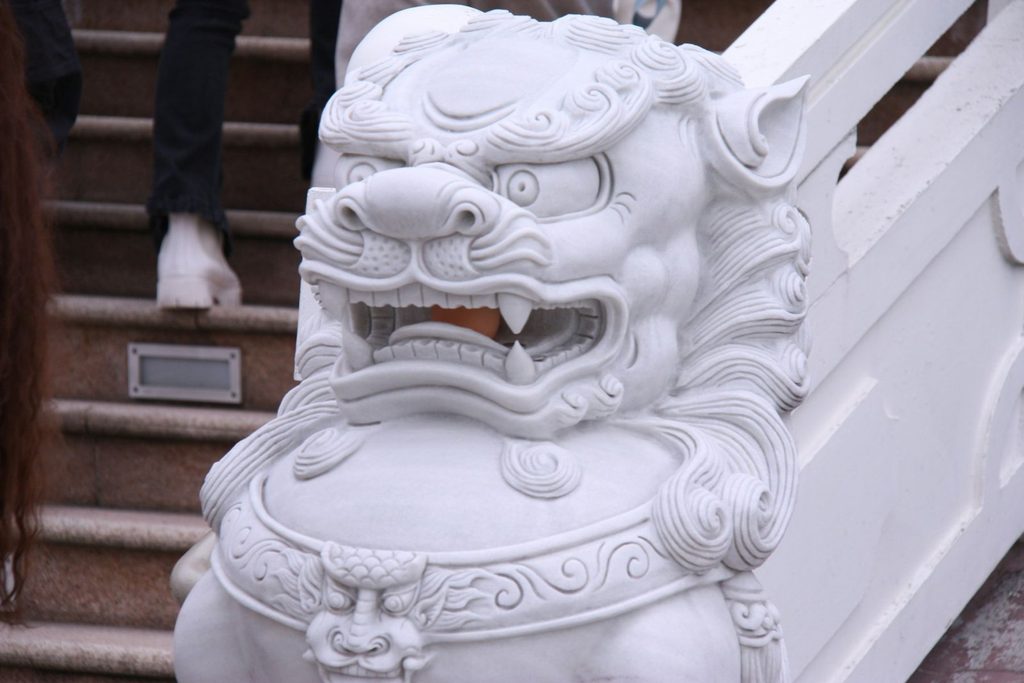
The main hall, the Gracious Hall, holds large Buddha statues and rich decoration. Around it are courtyards, smaller halls and covered walkways. Carved white stone lions guard the stairs and gateways, and incense burners stand in the courtyards.
Take time over the details. The roof ridges carry small figures, the eaves are painted in bright patterns of blue, green and gold, and the railings are carved with flowers and clouds. Lanterns hang along the walkways, and inscriptions in Chinese characters appear on boards above the doors. Even if you know nothing about Buddhist art, the craftsmanship is easy to appreciate.
The garden
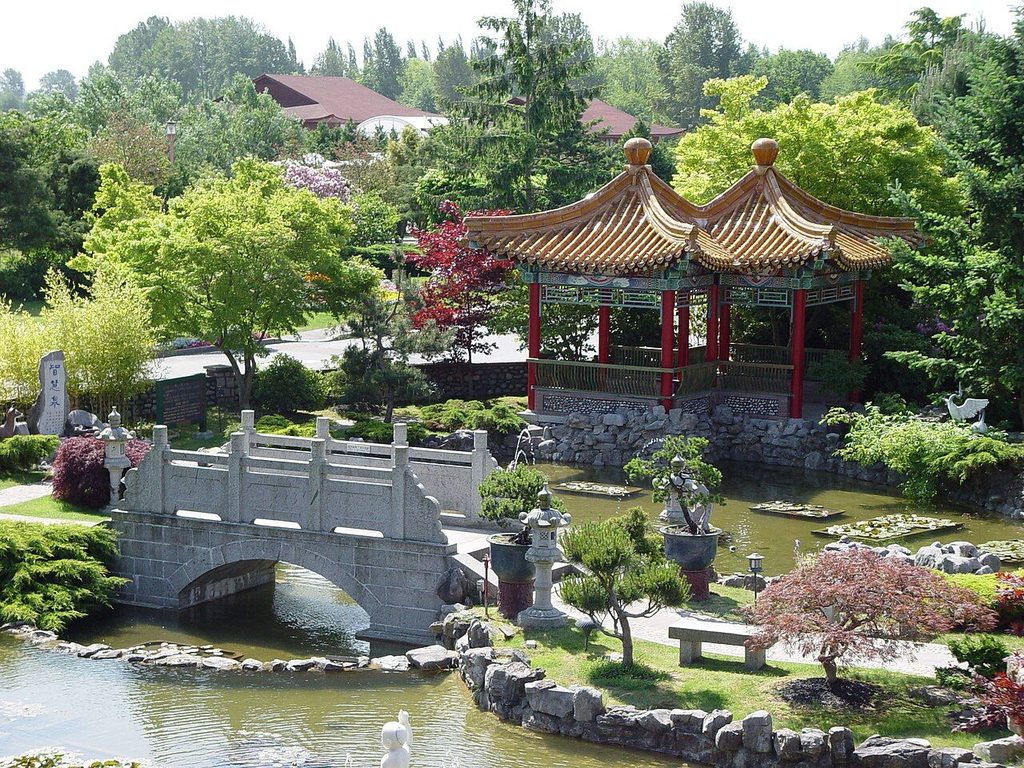
In front of the main buildings is a Chinese-style garden with a pond, an arched stone bridge, a pavilion with an upturned roof, lanterns, rockwork and carefully shaped trees. It is one of the most peaceful spots in Richmond, and many visitors spend as much time here as in the halls.
The garden is lovely in spring, when blossoms and new leaves appear, and in autumn, when the maples turn red. Summer brings the lotus and water lilies in the pond. In any season it rewards a slow walk.
How to behave as a visitor
The temple is a place of worship first. Visitors are welcome, but a few simple customs help you show respect:
- Dress modestly. Cover your shoulders and avoid very short shorts or skirts.
- Keep your voice low, especially inside the halls.
- Remove your hat indoors.
- Follow posted signs about photography. Some halls do not allow photos.
- Do not climb on statues, lions or railings, and do not touch offerings.
Also worth a look: Eating your way down No. 3 Road
- Walk around people who are praying or bowing, never in front of them.
- Do not point your feet at Buddha images if you sit down.
- Turn off your phone's sound.
You may see worshippers lighting incense, bowing or making offerings of fruit and flowers. You are welcome to watch quietly. If you want to take part, follow what others do, and ask temple staff or volunteers if you are unsure.
The temple in Richmond's life
Richmond has one of the largest Chinese-Canadian communities in North America, and the temple is part of that story. It hosts religious ceremonies, festival celebrations and community events throughout the year. Around Lunar New Year and the Buddha's birthday, it can be very busy, with crowds, ceremonies and decorations. These are good times to see the temple at its most lively, but expect limited parking and long waits.
The temple sits near No. 5 Road, sometimes called the Highway to Heaven because so many places of worship line it: churches, mosques, gurdwaras, Hindu temples and Buddhist temples, all within a short distance. Driving or cycling along it shows a different side of Richmond's diversity.
All of Richmond, including this site, is on the traditional territory of the Musqueam people.
Getting there
The temple is in east Richmond, away from the Canada Line. From Richmond-Brighouse station, take a bus east toward the temple; the trip takes about half an hour, including the walk from the stop. Buses on this route may run less often on weekends and evenings.
By car, there is a parking lot on site, though it fills during festivals. Cyclists can reach it on a mix of roads and paths, but some roads in the area are busy.
The temple has generally been free to enter, with donations welcome. Hours can shift around festivals.
Combining your visit
The temple fits well with a day exploring Richmond's food scene. After a quiet morning in the garden, head back toward the city centre for lunch, where you can try dim sum or noodles; see eating your way down No. 3 Road for ideas.
If you have more time, Steveston and the river are about twenty minutes away by car. A long day could pair the temple with a sunset at Garry Point.
A quiet hour
Many visitors arrive expecting a quick look and stay much longer. The combination of careful architecture, the garden and the calm atmosphere makes the temple a good place to slow down. Come early on a weekday if you can, when it is quietest, and give yourself time to sit by the pond.
Photographers will find the best light in the morning and late afternoon, when the low sun brings out the colour of the roof tiles and the carving on the stonework. Rainy days have their own appeal: wet stone, glossy leaves and reflections in the pond. Whatever the weather, remember that people come here to pray, and keep your camera discreet around them.